The Contribution of Teacher Instructional Management to Early Numeracy Achievement in 5-6-Year-Old Children
DOI:
https://doi.org/10.17509/j-mer.v7i2.1480Keywords:
determination, instructional management, early numeracy, children aged 5–6 years, early childhood educationAbstract
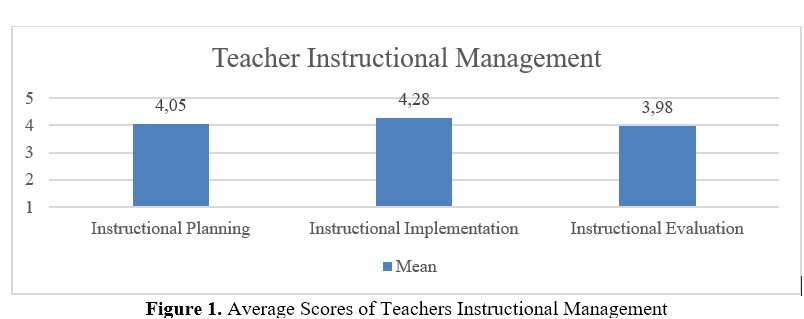
Teacher instructional management plays a vital role in fostering cognitive development and foundational mathematical competence during early childhood. This study examined the empirical contribution of teacher instructional management to children's early numeracy achievement in early childhood education (ECE) centers across West Bandung Regency. Employing a quantitative ex post facto correlational design, data were collected from 25 ECE teachers and 60 Group B children (aged 5–6 years) across 25 classrooms. To resolve the non-independence of nested data, individual child scores were aggregated to N = 25 classroom-level units. Teacher instructional management was measured using a validated 20-item Likert questionnaire. At the same time, children's early numeracy skills were evaluated using a Developmentally Appropriate Practice (DAP)-aligned observation sheet featuring concrete manipulatives and strong inter-rater agreement. Descriptive findings indicated that overall teacher instructional management fell into the "Good" category (M = 4.12, SD = 0.32), with instructional implementation achieving the highest mean (M = 4.28) and evaluation recording the lowest (M = 3.98). Children's numeracy performance reached the "Developing as Expected" stage (M = 3.08, SD = 0.39), with number recognition scoring highest (M = 3.25) and pattern recognition scoring lowest (M = 2.80). Simple linear regression analysis revealed that teacher instructional management significantly predicts early numeracy achievement (β = .678, F(1, 23) = 19.59, p < .001), explaining 46.0% of the variance (R2 = .460, f2 = 0.852). These results underscore that structured classroom management creates an essential pedagogical foundation for early mathematical learning. Early childhood educators are encouraged to strengthen reflective assessment logging and integrate concrete manipulatives to support complex numeracy skills such as patterning.
Downloads
References
Clements, D. H., & Sarama, J. (2020). Learning and teaching early math: The learning trajectories approach. Routledge.
Dasan, S. (2025). Peran guru sekolah dasar dalam meningkatkan literasi dan numerasi dasar. Jurnal Ilmu Pendidikan Guru Sekolah Dasar Dan Usia Dini, 2(1), 19–24.
Fidesrinur, F., Fitria, N., Lestari, A., & Riza, E. (2025). Upaya Meningkatkan Kemampuan Numerasi Awal Anak Usia 5–6 Tahun melalui Media Zoo Math Pack. Jurnal Obsesi: Jurnal Pendidikan Anak Usia Dini, 9(3), 809–821.
Filtri, H. (2023). Peran Orangtua Dalam Pengembangan Literasi Numerasi Pada Anak Usia Dini. Edusiana: Jurnal Ilmu Pendidikan, 1(2).
Hair, J. F., Black, W. C., Babin, B. J., & Anderson, R. E. (2021). Multivariate data analysis.
Hakim, A. R., & Rostini, D. (2026). Professional Competency Management of Teachers in Improving the Quality of Meaningful Learning in Elementary Schools. Journal of Innovation and Research in Primary Education, 5(1), 621–633.
Koenarso, D. A. P. (2023). Assessment and evaluation of early childhood education institutions. ThufuLA: Jurnal Inovasi Pendidikan Guru Raudhatul Athfal, 11(1), 165–180.
Koo, B., Lee, K.-S., & Khojasteh, J. (2021). Review of an introduction to multilevel modeling techniques. Taylor & Francis.
Kurniansyah, M. Y., Meilani, R., & Aryanti, L. N. (2026). From play to numeracy: exploring cognitive and pedagogical processes in early childhood learning. Journal on Mathematics Education Research (J-MER), 7(1), 135–147.
Levy, R. V., & Wasmuth, H. (2025). Developmentally appropriate practice and its impact on the field of early child education and care in the United States1. International Perspectives on the History of Early Childhood Education: Institution–Family–Profession, 109.
Lüken, M. M., & Sauzet, O. (2021). Patterning strategies in early childhood: A mixed methods study examining 3-to 5-year-old children’s patterning competencies. Mathematical Thinking and Learning, 23(1), 28–48.
Misrawati, M., & Suryana, D. (2021). Bahan Ajar Matematika Berbasis Model Pembelajaran Tematik terhadap Kemampuan Berhitung Anak Usia Dini. Jurnal Obsesi : Jurnal Pendidikan Anak Usia Dini, 6(1), 298–306. https://doi.org/10.31004/obsesi.v6i1.1249
Nugraha, A. C., & Muntazhimah, M. (2024). Analisis konten penelitian kemampuan numerasi awal pada anak usia dini: Tinjauan metodologi penelitian. JURNAL OBSESI Учредители: Universitas Pahlawan Tuanku Tambusai, 8(5), 1174–1184.
Poth, C. N. (2023). The Sage handbook of mixed methods research design.
Privitera, G. J. (2022). Research methods for the behavioral sciences (3rd updated ed.). Sage Publications.
Rahayu, S. (2025). Exploring the influence of interactive learning media on the numerical ability of early childhood learners at PAUD Gemilang Tangerang Selatan. Jurnal ASIK: Jurnal Administrasi, Bisnis, Ilmu Manajemen & Kependidikan, 3(3), 56–66.
Ratnawati, S. (2021). Pengembangan potensi anak usia dini. La-Tahzan: Jurnal Pendidikan Islam, 13(1), 97–115.
Rittle-Johnson, B., Zippert, E. L., & Boice, K. L. (2019). The roles of patterning and spatial skills in early mathematics development. Early Childhood Research Quarterly, 46, 166–178.
Safitri, A., Kabiba, K., Nasir, N., & Nurlina, N. (2020). Manajemen pembelajaran bagi anak usia dini dalam meningkatkan kualitas pembelajaran. Jurnal Obsesi: Jurnal Pendidikan Anak Usia Dini, 5(2), 1209–1220.
Sarama, J., & Clements, D. H. (2019). Learning trajectories in early mathematics education. Researching and Using Progressions (Trajectories) in Mathematics Education, 3, 32–55.
Schwartz, M., Hijazy, S., & Deeb, I. (2021). The role of play in creating a language-conducive context in a bilingual preschool. European Early Childhood Education Research Journal, 29(3), 381–396.
Suryana, D. (2021). Pendidikan anak usia dini teori dan praktik pembelajaran. Prenada media.
Wijns, N., Torbeyns, J., Bakker, M., De Smedt, B., & Verschaffel, L. (2019). Four-year olds’ understanding of repeating and growing patterns and its association with early numerical ability. Early Childhood Research Quarterly, 49, 152–163.