Mapping the Difficulties of Junior High School Mathematics Teachers in Sukabumi Regency for OSN Coaching
DOI:
https://doi.org/10.17509/j-mer.v7i2.1646Keywords:
Exploratory Factor Analysis, OSN, Teacher DifficultiesAbstract
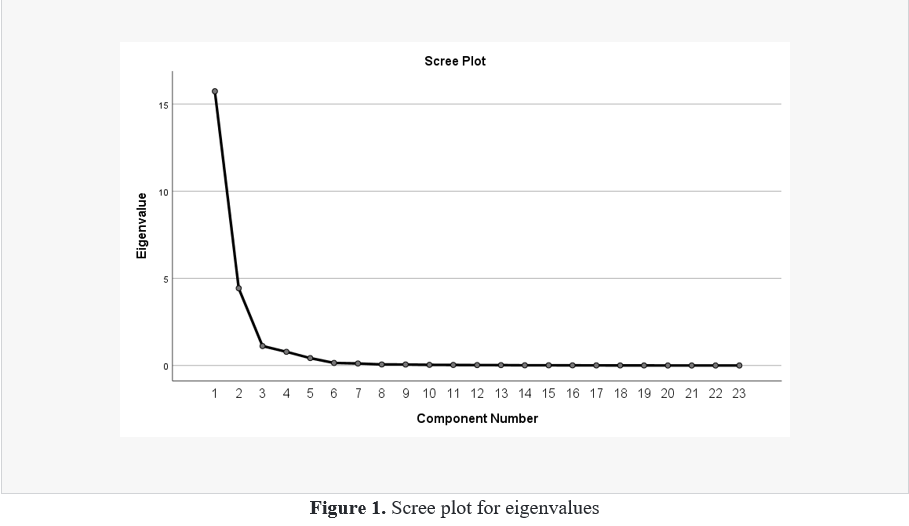
Coaching students for the National Science Olympiad (OSN) in Mathematics demands teacher competencies that differ from regular classroom teaching. However, studies mapping the difficulties of olympiad coaches in Indonesia remain limited. This study aimed to map the difficulties junior high school mathematics teachers in Sukabumi Regency face in coaching for the OSN. A cross-sectional survey used a 32-item, five-point Likert questionnaire across eight initial constructs and was analyzed using Exploratory Factor Analysis (Principal Axis Factoring, Direct Oblimin rotation). The data were suitable for factoring (KMO = 0.770; Bartlett's χ² = 1,199.955; df = 276; p < 0.001). After eight problematic items were removed, 24 items formed three factors: specialized pedagogy, differentiation, and coaching planning (11 items); mathematical competence, problem design, and self-development (6 items); and talent identification and progress monitoring (7 items). School support items did not form a stable structure. The 24-item instrument demonstrated excellent internal consistency, yielding a global Cronbach's alpha of 0.970 and factor-specific Composite Reliability (CR) values well above the 0.70 threshold. Exploratory Factor Analysis (EFA) extracted three distinct dimensions explaining 72.678% of the total variance: Factor 1 (specialized pedagogy, differentiation, and coaching planning; CR = 0.9652) accounted for 58.526%; Factor 2 (mathematical competence, problem preparation, and self-development; CR = 0.9186) for 8.759%; and Factor 3 (talent identification and student development monitoring; CR = 0.9471) for 5.393%. Factor 1 emerged as the most dominant dimension, representing the greatest perceived difficulty among the participating teachers.
Downloads
References
Ayık, Z., Çetin, G., & Usta, M. E. (2025). Sustained primary teacher provision for the gifted: The influence of gifted conceptions on nomination and differentiation. BMC Psychology, 13, Article 901. https://doi.org/10.1186/s40359-025-03249-z
Cheung, A. C. K., et. al. (2022). Professional development for teachers of gifted education in Hong Kong: Instrument validation and training effectiveness. International Journal of Environmental Research and Public Health, 19(15), Article 9433. https://doi.org/10.3390/ijerph19159433
Hair, J. F., et al. (2010). Multivariate Data Analysis (7th ed.). Prentice Hall. https://eli.johogo.com/ Class/ CCU/SEM/ _Multivariate%20 Data %20Analysis_Hair.pdf.
Harahap, P. A. et. al. (2025). Improving the capabilities of high school students and teachers through the development of the mathematics olympiad. JMM (Journal of Independent Society), 9(3), 2929–2939. https://doi.org/10.31764/jmm.v9i3.31331
Hinch, L. et al. (2024). Irish teacher practice of differentiation for gifted students. Gifted Education International, 40(2), 233–253. https://doi.org/10.1177/02614294241251576
Jackson, J. E. (1991). A user's guide to principal components. John Wiley & Sons.
Li, X. et al. (2022). Learning to teach mathematics through problem posing: Teachers' beliefs and their instructional practices. International Journal of Educational Research, 115, Article 102038. https://doi.org/10.1016/j.ijer.2022.102038
Lin, T., Jiang, P., & Xiong, B. (2025). Teacher adaptability and student development in online teaching environments: A survey of teachers of Chinese mathematics competitions for gifted students. Behavioral Sciences, 15(5), Article 690. https://doi.org/10.3390/bs15050690
Lv, S. et al. (2024). Stress in Chinese teachers who teach the mathematically gifted: A qualitative perspective. Frontiers in Psychology, 15, Article 1388236. https://doi.org/10.3389/fpsyg.2024.1388236
Mahatma, Y., Hadi, I., & Agustine, D. (2020). Training on making Olympiad/mathematics competition questions at the junior high school level for junior high school teachers in Bogor Regency, West Java Province. Proceedings of the National Seminar on Community Service, 1(1), SNPPM2020ST-140–SNPPM2020ST-144. https://doi.org/10.21009/snppm
Montes, M. et al. (2024). Mathematics teachers' specialized knowledge mobilized through problem transformation. The Journal of Mathematical Behavior, 73, Article 101132. https://doi.org/10.1016/j.jmathb.2024.101132
Olszewski-Kubilius, P. (2024). Where are we now with the implementation of the talent development framework for gifted students and where do we go in the future? Education Sciences, 14(9), Article 932. https://doi.org/10.3390/educsci14090932
Pansell, A. (2023). Mathematical knowledge for teaching as a didactic praxeology. Frontiers in Education, 8, Article 1165977. https://doi.org/10.3389/feduc.2023.1165977
Scheiner, T., Buchholtz, N., & Kaiser, G. (2024). Mathematical knowledge for teaching and mathematics didactic knowledge: A comparative study. Journal of Mathematics Teacher Education, 27(6), 1083–1104. https://doi.org/10.1007/s10857-023-09598-z
Subotnik, R. F. et al. (2023). Transforming gifted education in schools: Practical applications of a comprehensive framework for developing academic talent. Education Sciences, 13(7), Article 707. https://doi.org/10.3390/educsci13070707
Tavakol, M., & Dennick, R. (2011). Making sense of Cronbach's alpha. International Journal of Medical Education, 2, 53–55. https://doi.org/10.5116/ijme.4dfb.8dfd
Umbara, H. D. A. D., et al. (2025). Strengthening mathematical thinking skills for the mathematics olympiad: A collaboration of academics and education practitioners. PAKEM: Journal of Community Service, 5(2), 109–120. https://ojs3.unpatti.ac.id/index.php/pakem/article/view/19512.
Watkins, M. W. (2018). Exploratory factor analysis: A guide to best practice. Journal of Black Psychology, 44(3), 219–246. https://doi.org/10.1177/0095798418771807
Weber, C. L., & Mofield, E. L. (2023). Considerations for professional learning supporting teachers of the gifted in pedagogical content knowledge. Gifted Child Today, 46(2), 128–141. https://doi.org/10.1177/10762175221149258
Zhang, L., Stylianides, G. J., & Stylianides, A. J. (2024). Enhancing mathematical problem posing competence: A meta-analysis of intervention studies. International Journal of STEM Education, 11(1), Article 48. https://doi.org/10.1186/s40594-024-00507-1